Discover the 4 key elements to boost electric mobility in Spain, according to Jorge Ríos, in his Inspirational Talk
Jorge Ríos participated in SUMMIT 2024, hosted by Empresas por la Movilidad Sostenible, with an Inspirational Talk: “NO, I’M STILL NOT GOING TO BUY AN ELECTRIC CAR”
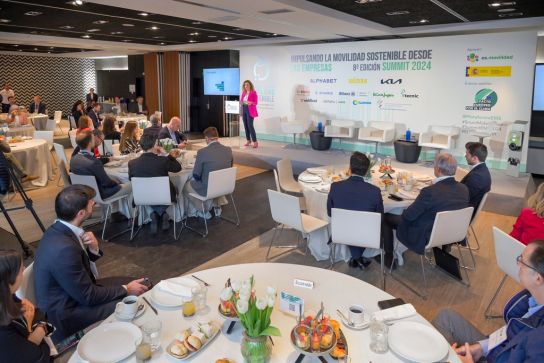
On February 22nd, during SUMMIT 2024 organized by Empresas por la Movilidad Sostenible, Jorge Ríos, CEO of Etecnic, gave an Inspirational Talk titled: “NO, I’M STILL NOT GOING TO BUY AN ELECTRIC CAR”.
During his inspiring talk, he addressed the current state of electric vehicles (EVs) in the country. He highlighted that EV registrations in Spain account for only a quarter of those recorded in countries like France and Portugal.
Ríos emphasized the need to improve the accessibility of charging points, suggesting their implementation in everyday locations such as shopping centers and workplaces, leveraging the key advantage that electricity is widely accessible.
He continued his speech with a call to public administrations to streamline procedures and facilitate subsidies related to EVs and charging infrastructure, removing bureaucratic hurdles. Furthermore, he stressed the importance of power grid management companies committing to ensuring grid accessibility by facilitating connections.
Ríos also pointed out the need for network operators to allow users to charge their vehicles using a single application, thereby simplifying the use of different charging points. Additionally, he highlighted the importance of keeping the network in good condition and improving its availability.
He identified three main challenges: leveraging existing charging infrastructure—relying on renewable energy if necessary; enhancing the user experience through advanced digital systems like license plate recognition; and achieving end-to-end management paired with maintenance and updates for new business models.
He concluded his speech by emphasizing the importance of commitment, innovation, and efficient management across the charging network. On a personal level, he pledged to lead this change, highlighting his own choice to drive an electric vehicle.
SUMMIT 2024: Driving Sustainable Mobility from Businesses
The 8th edition of ‘SUMMIT 2024: Driving Sustainable Mobility from Businesses’ brought together professionals, public administrations, and industry leaders on February 22nd to discuss the present and future of mobility.
The event “SUMMIT 2024: Driving Sustainable Mobility from Businesses” received endorsement from the Ministry of Transport and Sustainable Mobility and formed part of its Safe, Sustainable and Connected Mobility Strategy 2030, as well as es.movilidad and the European Climate Pact.
In this event, the initiative Empresas por la Movilidad Sostenible played a key role in promoting knowledge exchange and the development and application of solutions in this field. Additionally, this edition featured the participation and support of several notable companies, including Alphabet, MIDAS, KIA, Bosch Service Solutions, XCharge, Allianz Partners, El Corte Inglés, Etecnic, Webfleet, Astara Move, Ilunion, and AEEVCOS.

Upcoming approval of the Draft Sustainable Mobility Law: boosting mobility plans in workplaces and municipalities
José Antonio Santano, Secretary of State for Transport and Sustainable Mobility, announced upcoming organizational changes within his ministry during the event.
These changes aim to advance toward a comprehensive national mobility and transport policy. Santano emphasized the importance of pairing economic development with sustainability, noting a shift in citizen priorities toward higher quality infrastructure services, which he described as the best in the world. He highlighted the priority of placing the citizen at the center of mobility.
Furthermore, he mentioned the imminent processing of the Draft Sustainable Mobility Law, expected to be approved before the end of the year for entry into force in 2025, aligned with commitments made to Brussels. This law will require workplaces with more than 500 employees (or 250 per shift) and municipalities with populations between 20,000 and 50,000 inhabitants to implement mobility plans. Finally, he highlighted the creation of the National Transport System to foster cooperation among public administrations and ensure safe, connected, and intermodal transport.
Source : www.movilidadsostenible.com.es