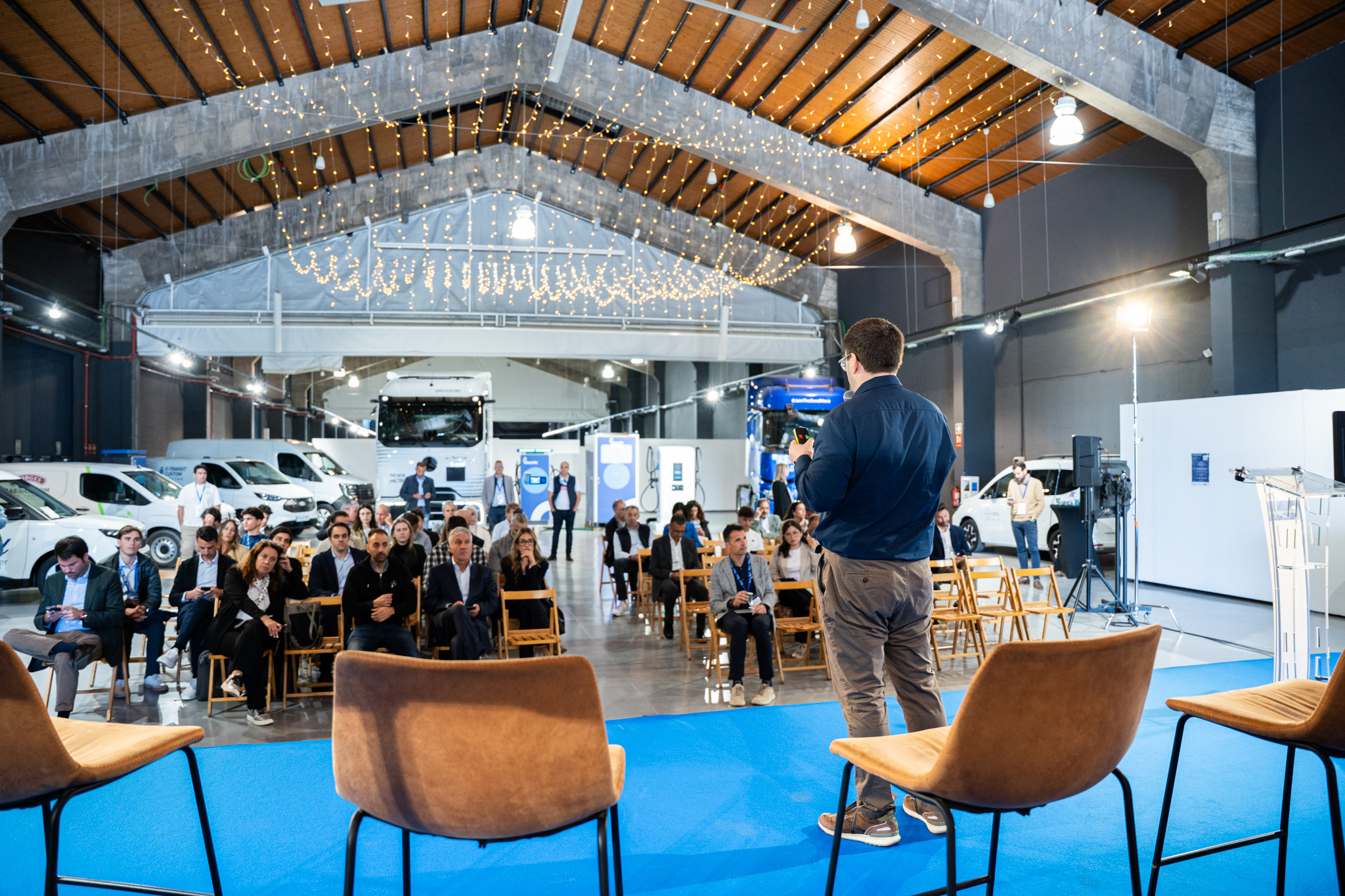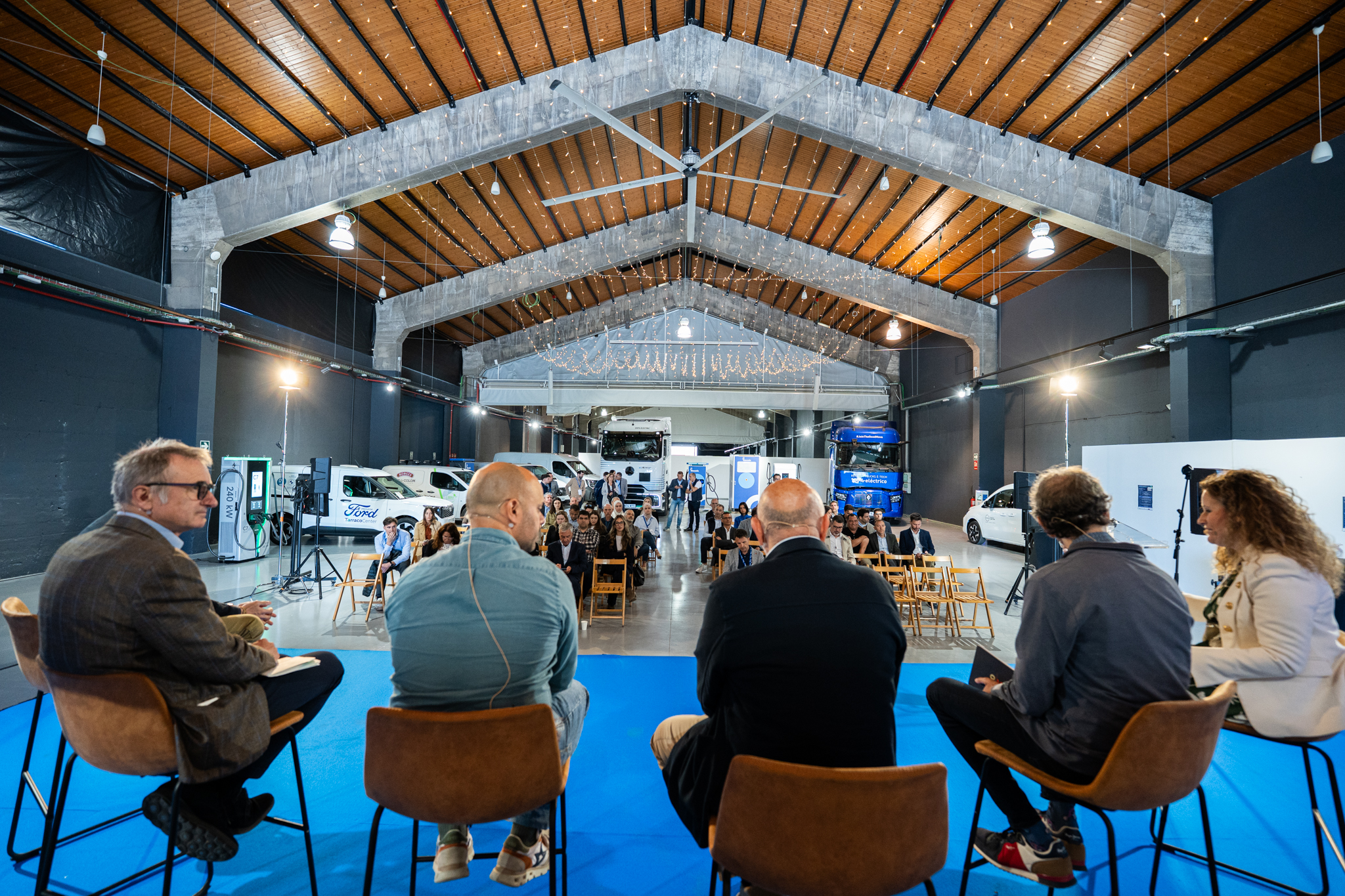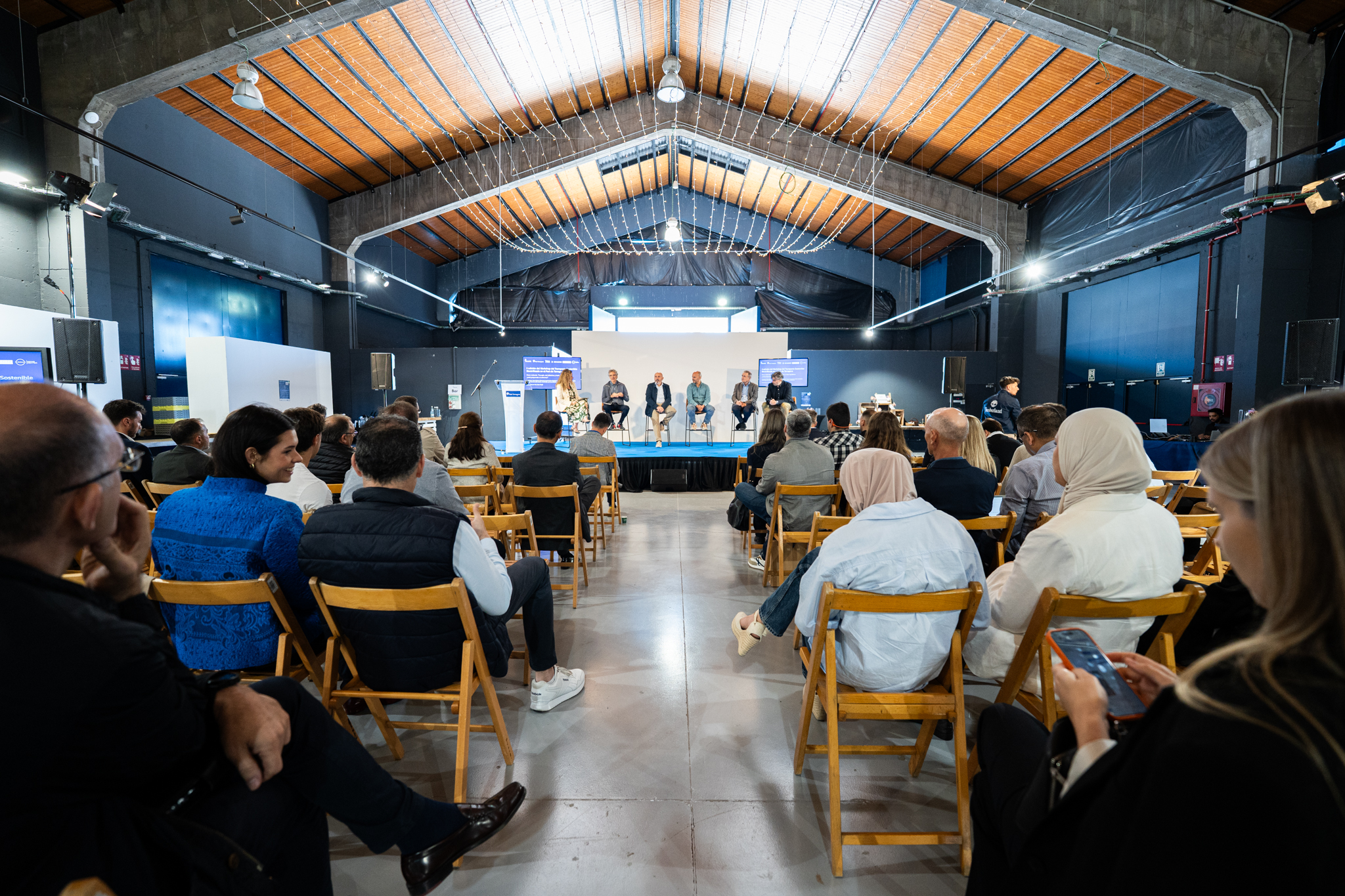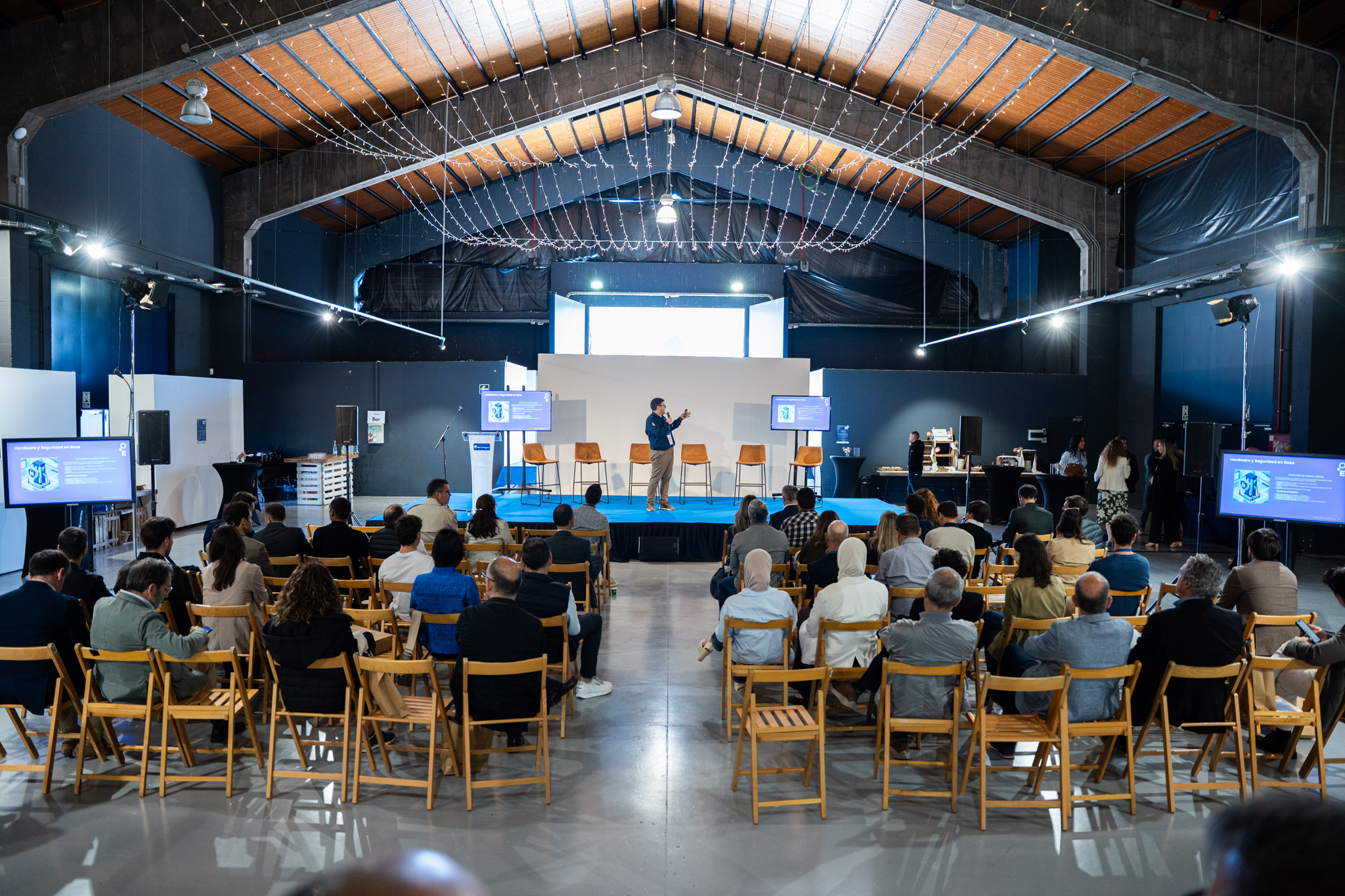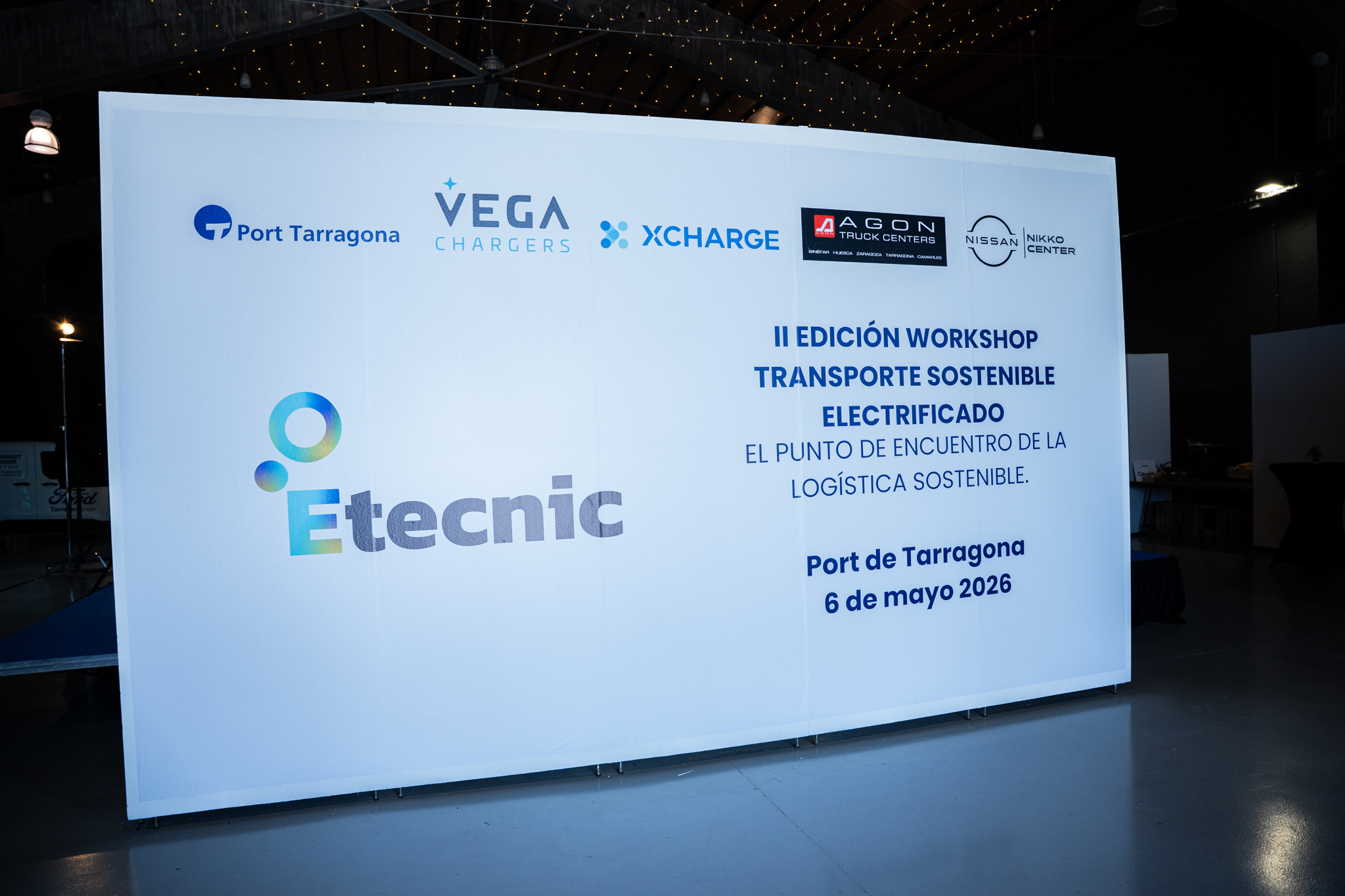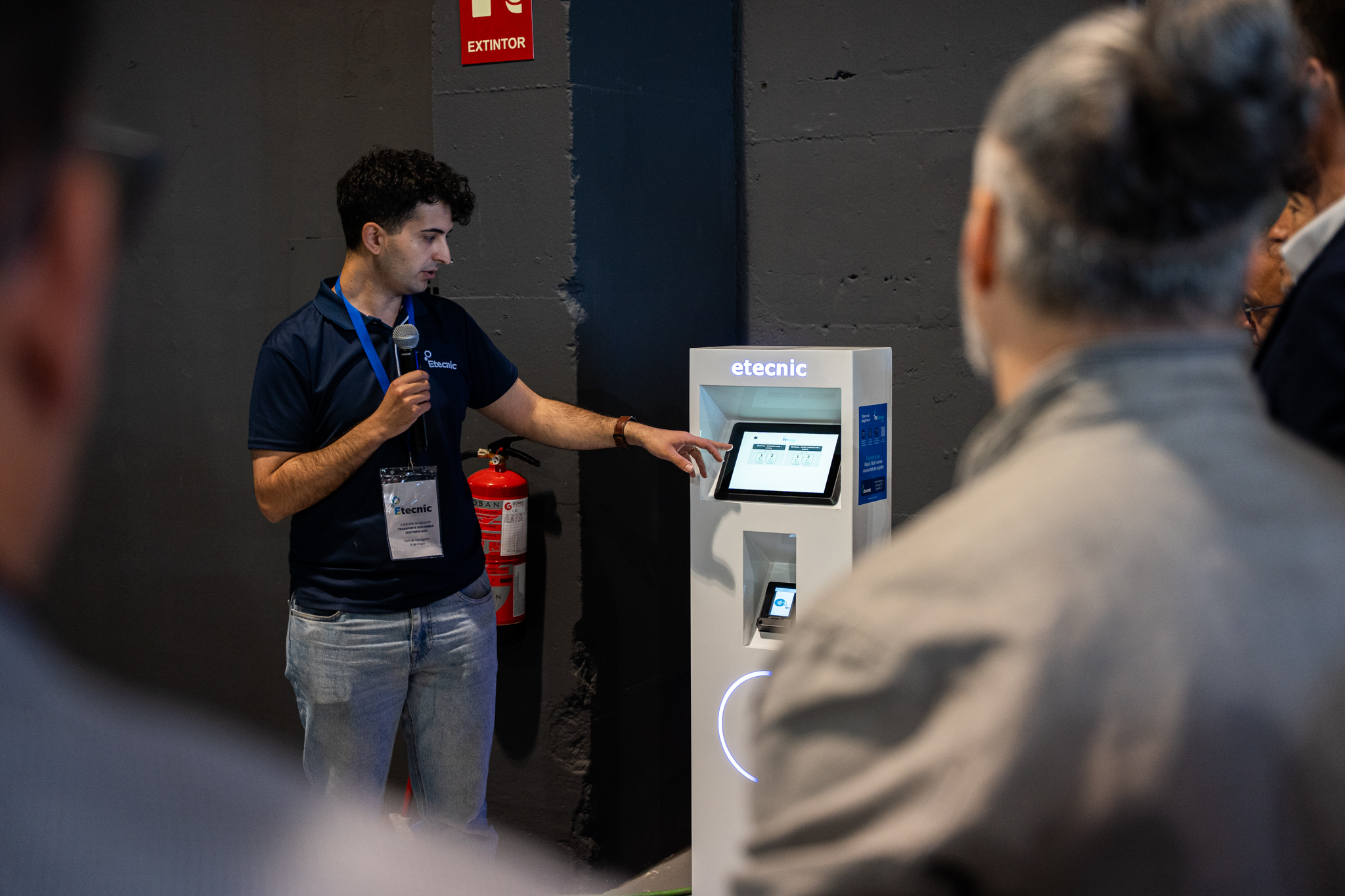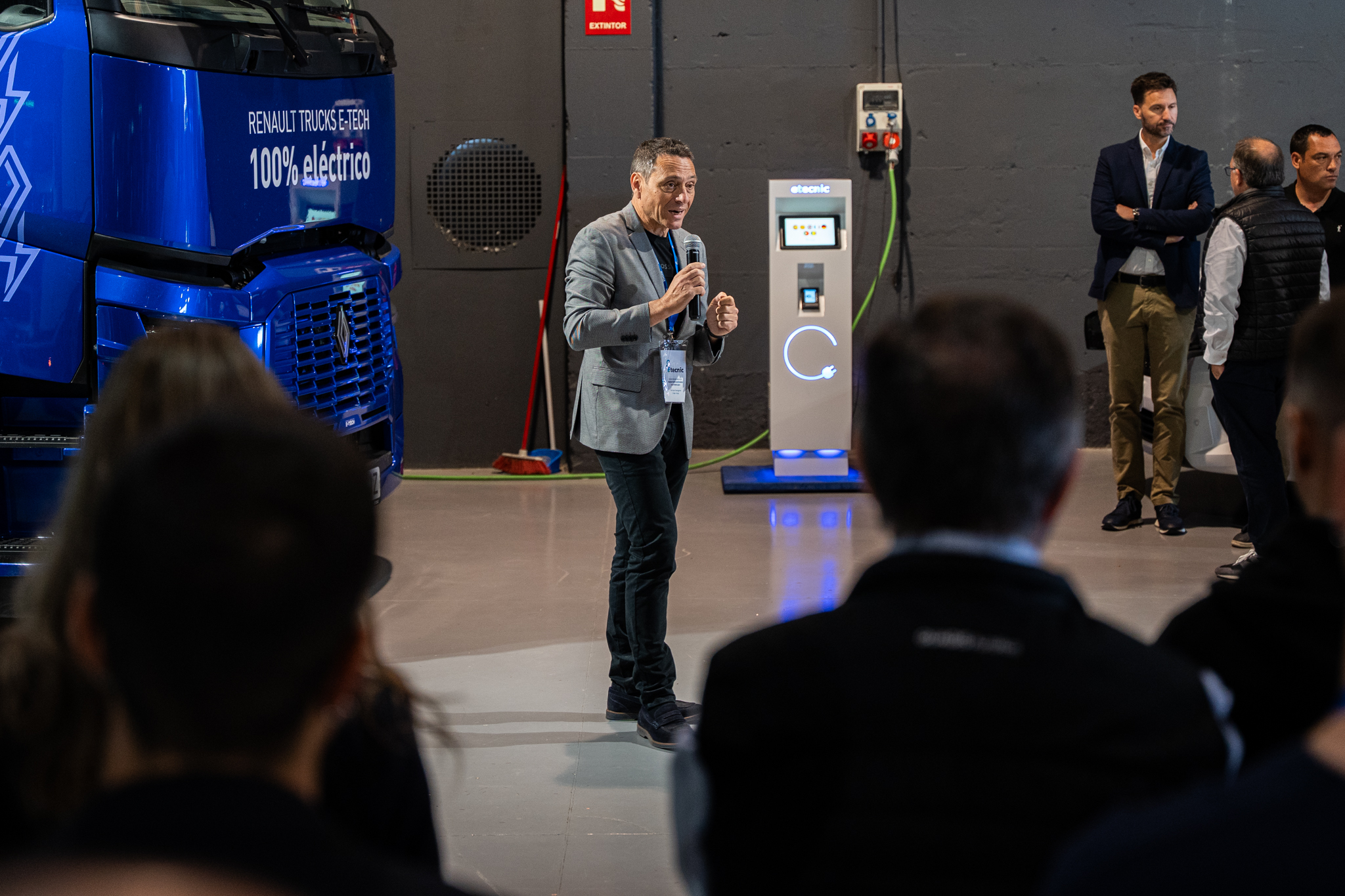
- More than 80 professionals gathered at the 2nd edition of the Electrified Sustainable Transport Workshop organized by Etecnic and the Port of Tarragona.
- Experts agree that the technology is already a reality, but urge the planning of large-scale infrastructure and the reduction of administrative barriers to guarantee competitiveness.
A conference driving the energy transition in transport
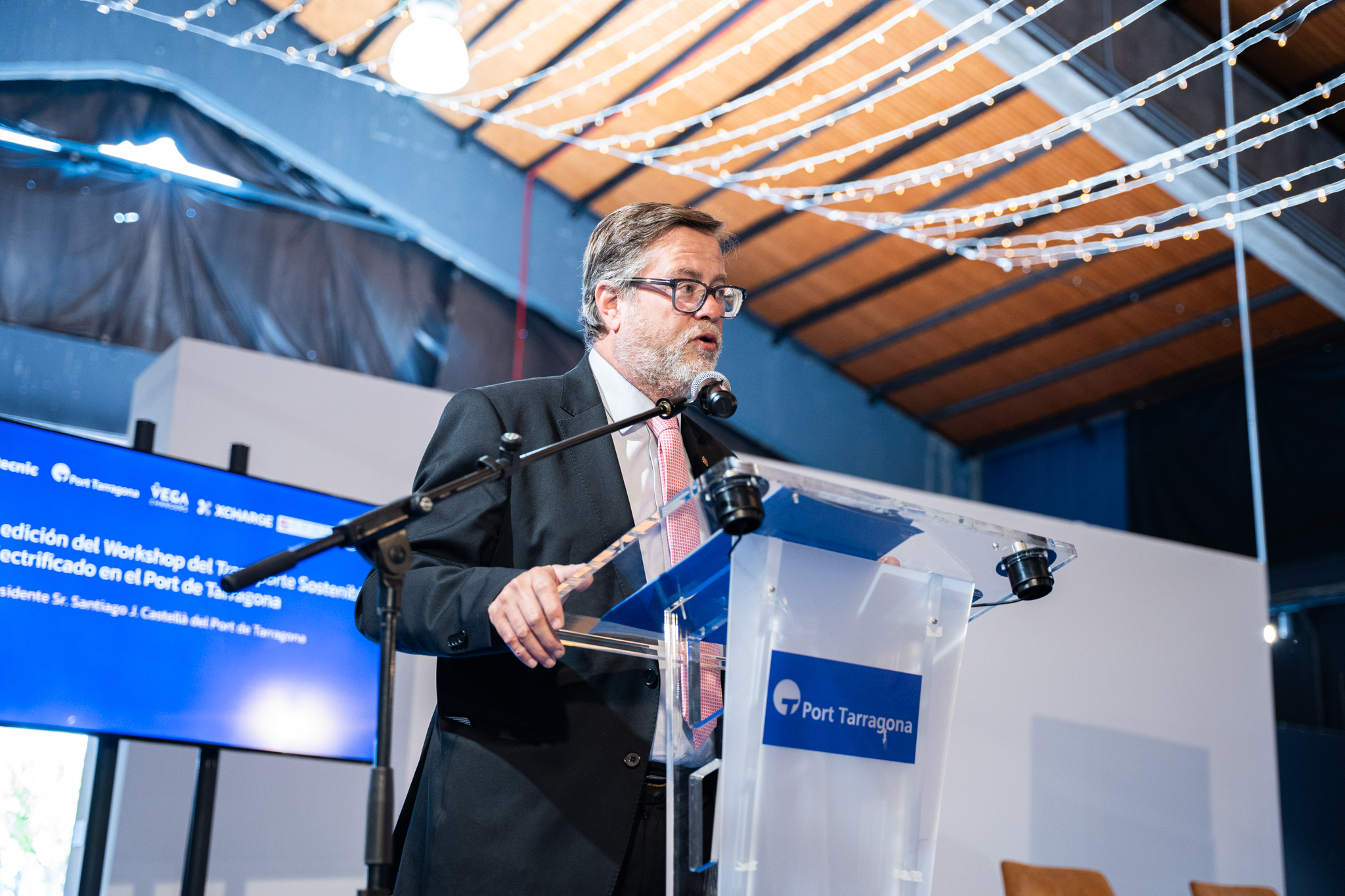
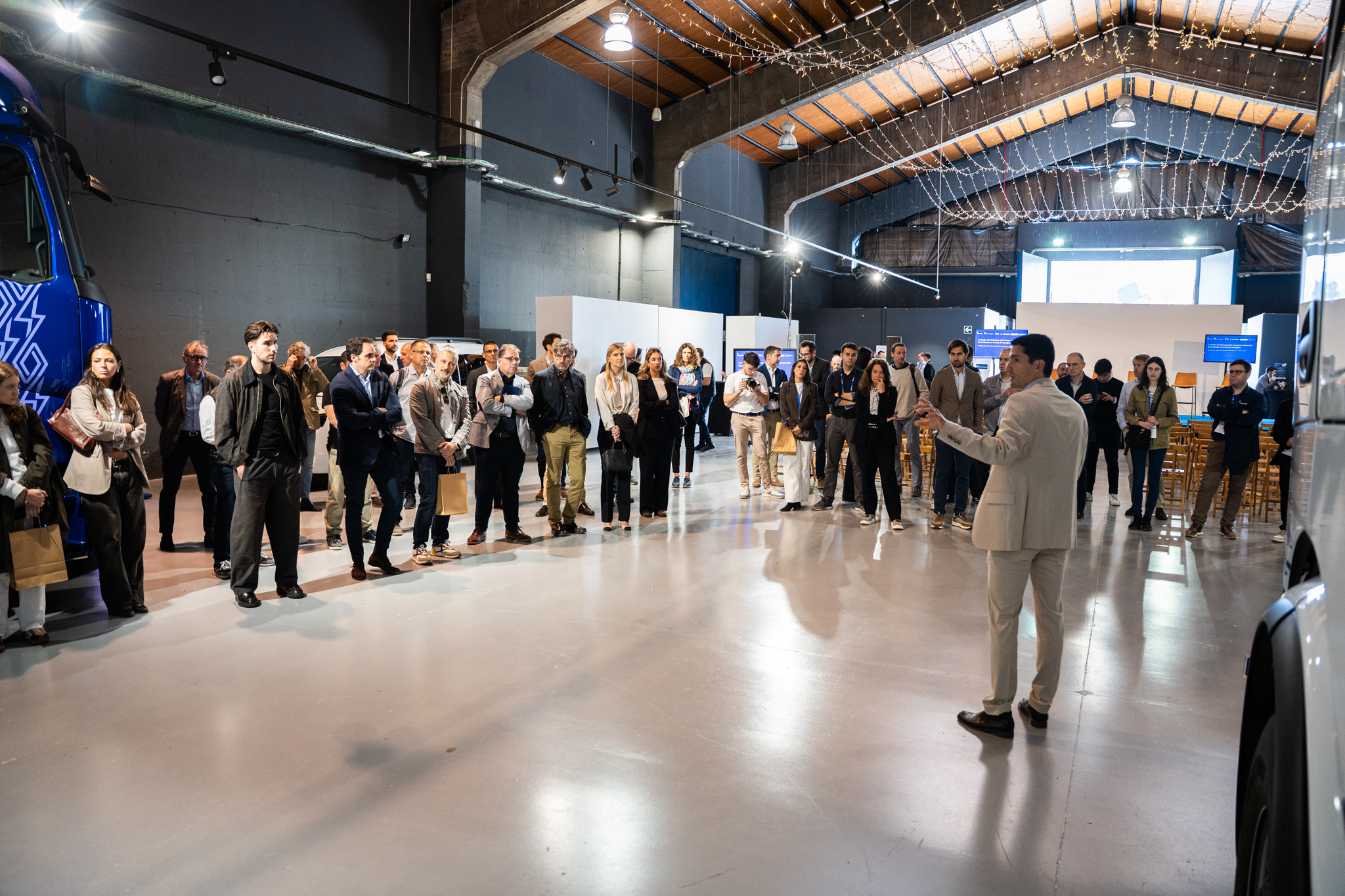
The session was opened by the president of the Port of Tarragona, Santiago Castellà, who highlighted the strategic role of ports as critical energy and logistics hubs. Castellà stressed that decarbonization is a shared challenge and congratulated Etecnic for leading initiatives that build real electric mobility. Furthermore, he announced the Port’s presidency of the BCL (Barcelona Catalunya Centre Logístic), inviting Etecnic to participate in order to place heavy electromobility at the center of the Catalan logistics agenda.
The event featured the participation of leading manufacturers such as VEGA Chargers, XCHARGE, Renault Trucks, Mercedes, Ford, and Nissan (NIKKO CENTER), as well as prominent associations like AEDIVE and Empresas por la Movilidad Sostenible (EMS), and leading operators including TRANSPAÍS, TRANSBERNAL, GRUPO JOANCA LOGÍSTICA, and SINTRA PORT.
Cutting-edge technology and real-world demonstrations
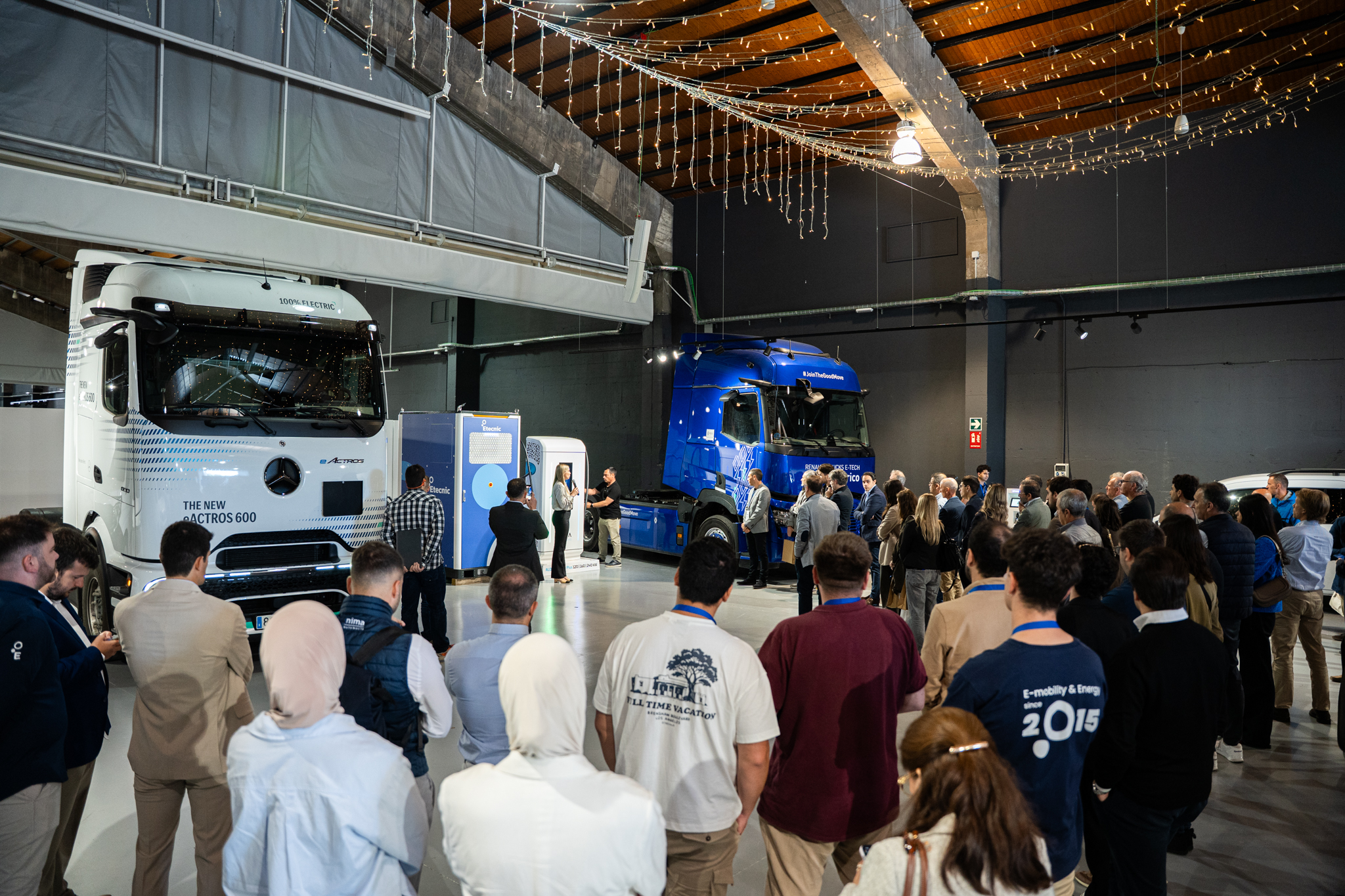
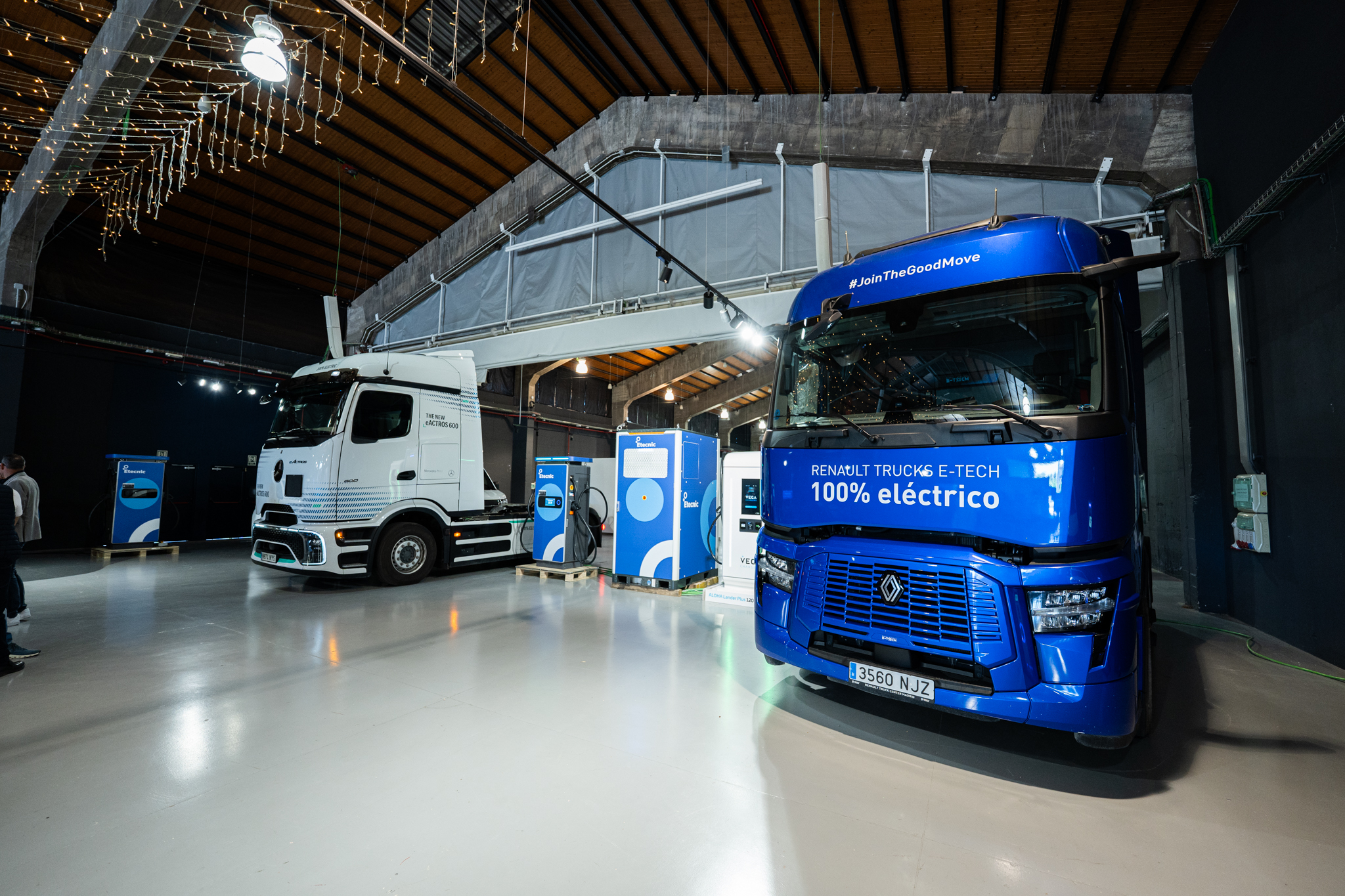
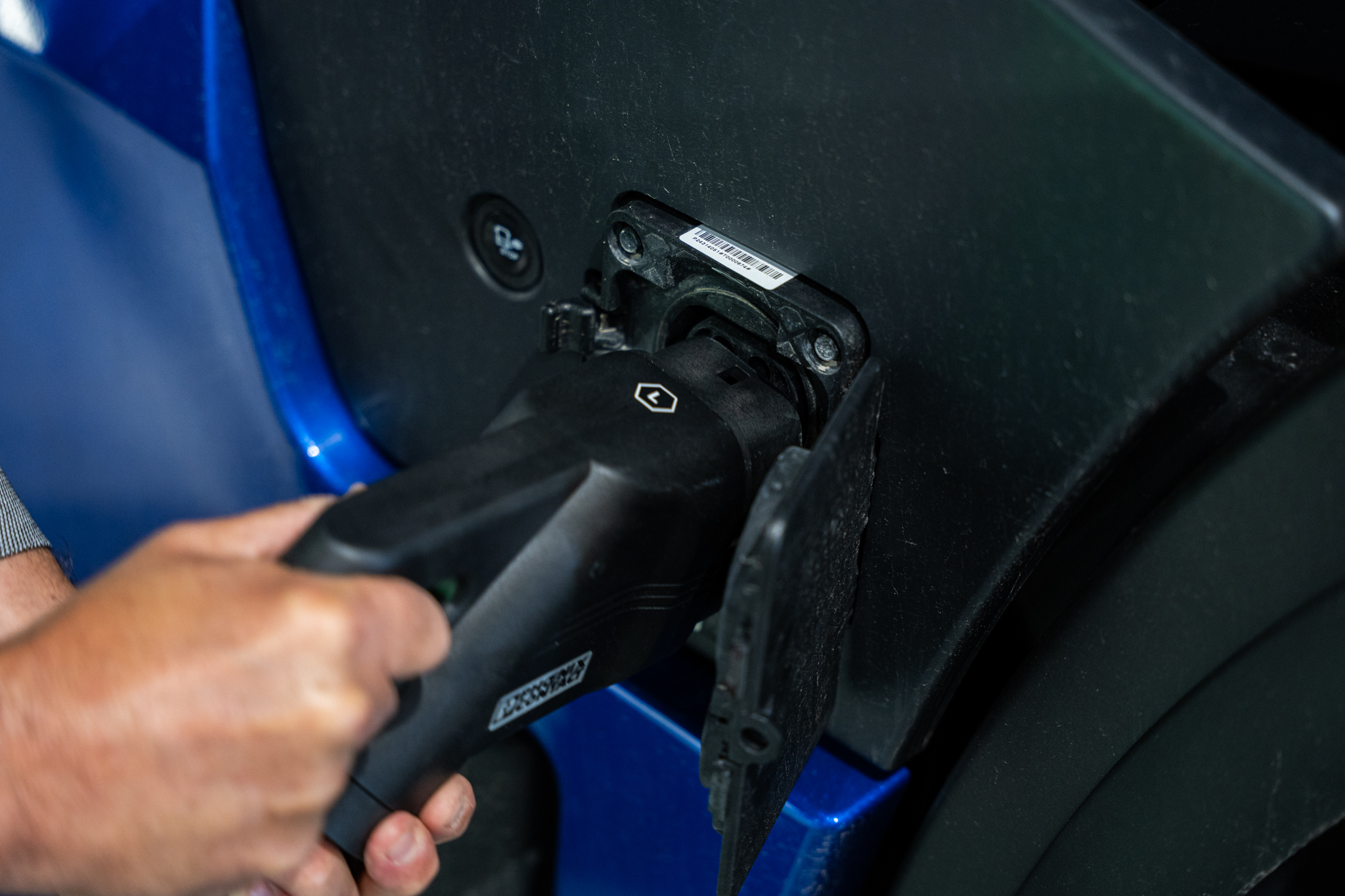
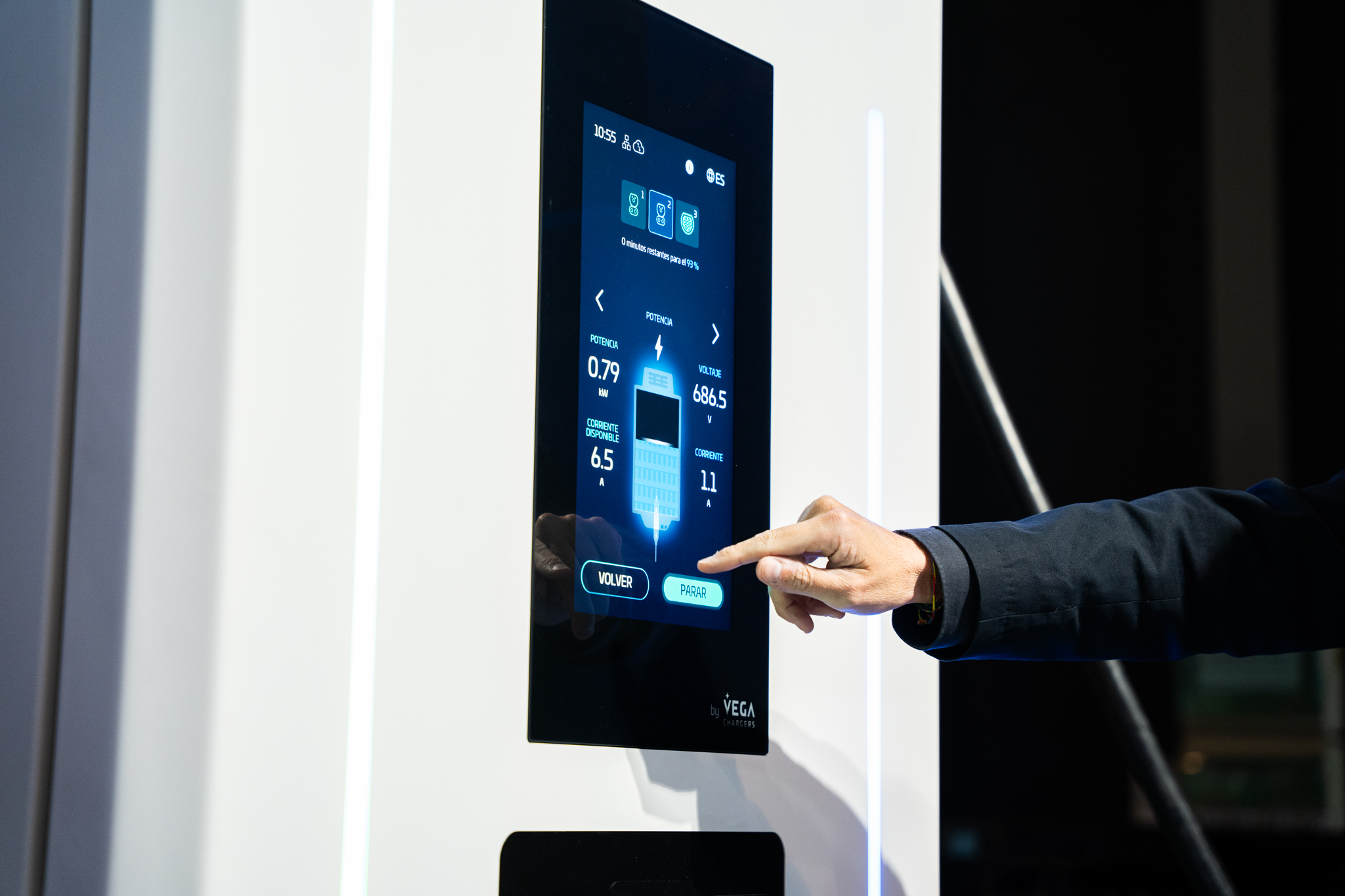
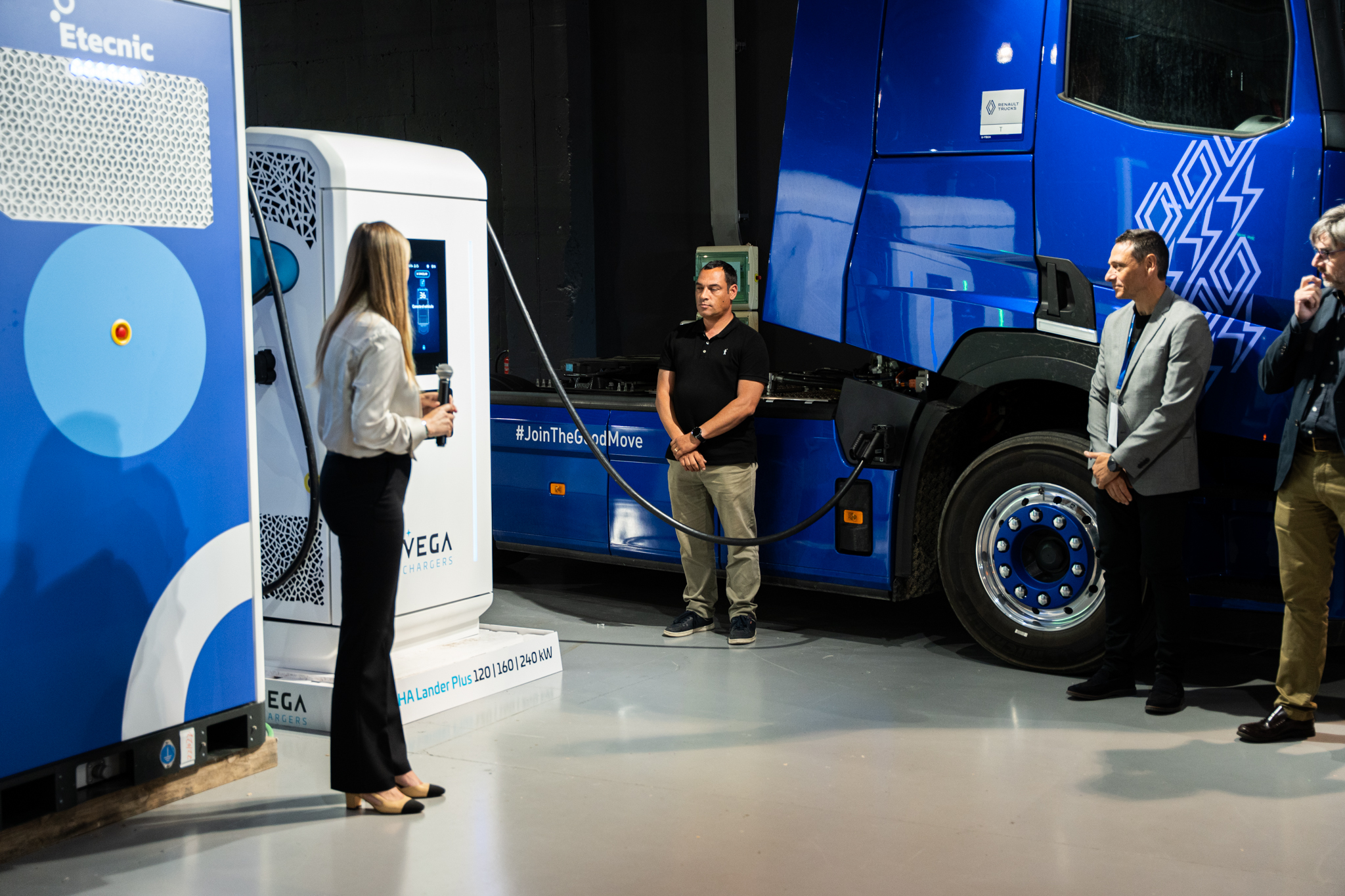
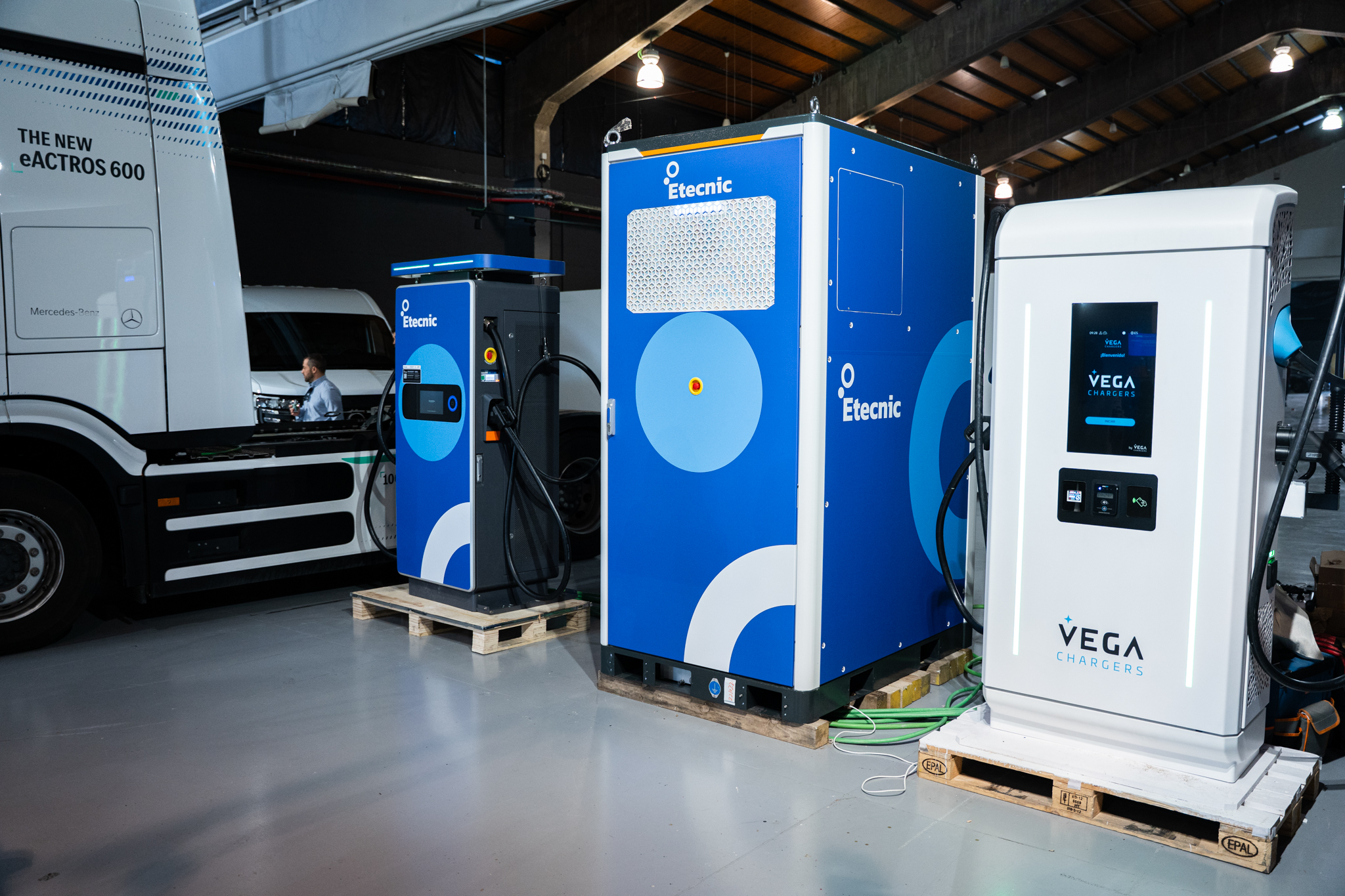
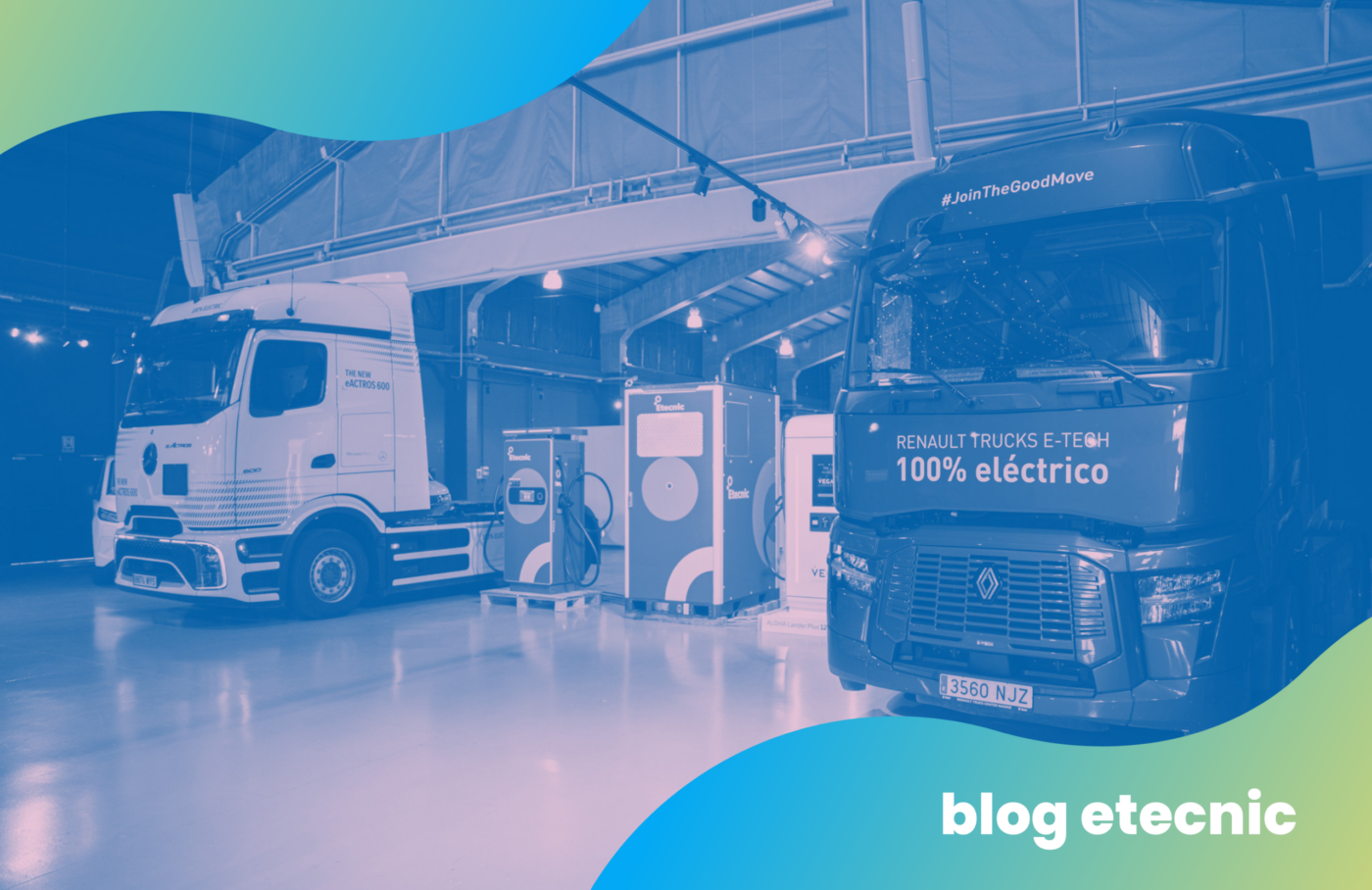
Equipment from the following also stood out in the DEMO zone:
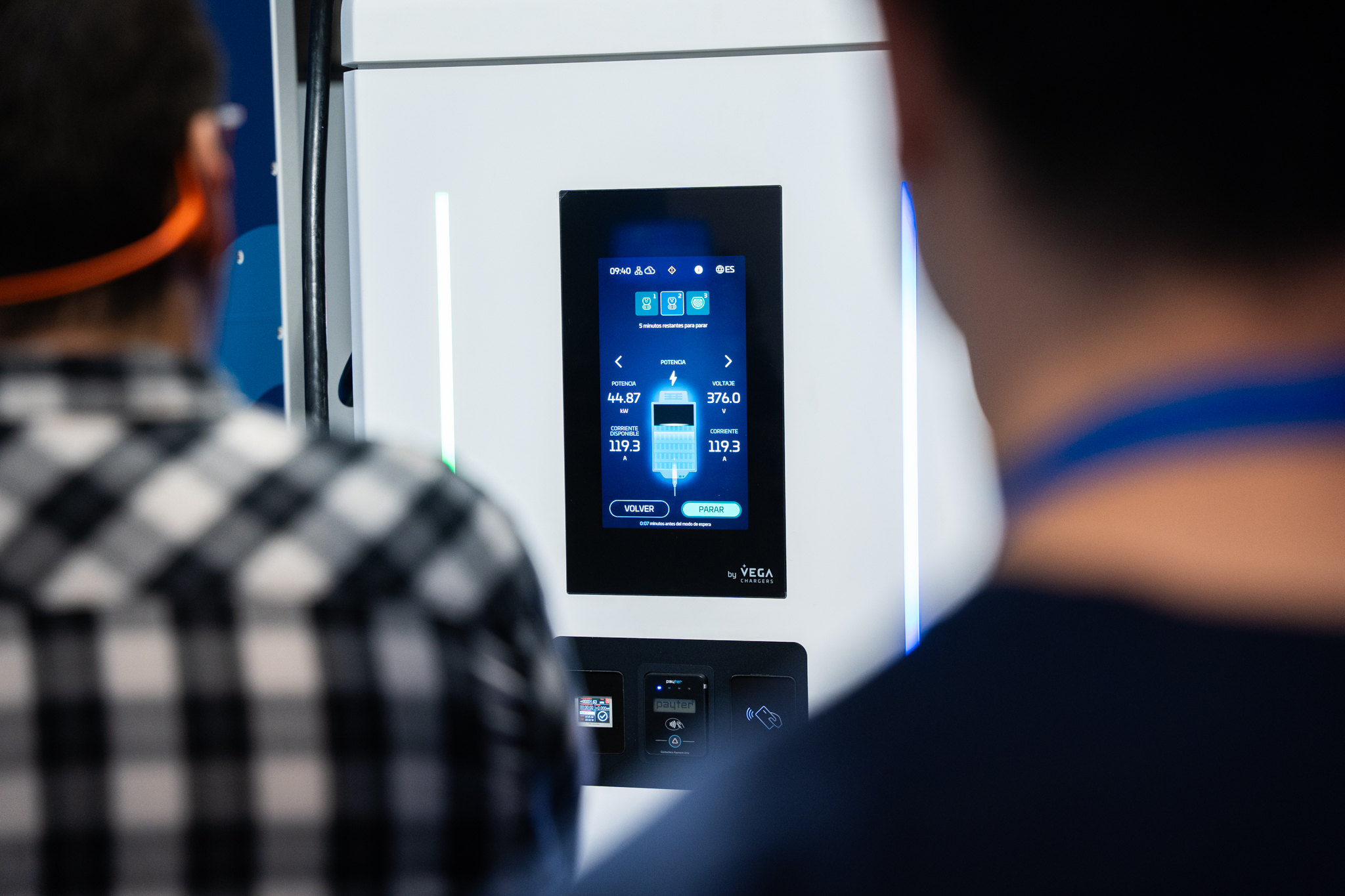
- VEGA Chargers: With their 160 kW ALOHA Lander Plus and 40 kW ALOHA Gravity models.
- XCHARGE: With the high-efficiency C7 SLIM model.
Alongside vehicles from:
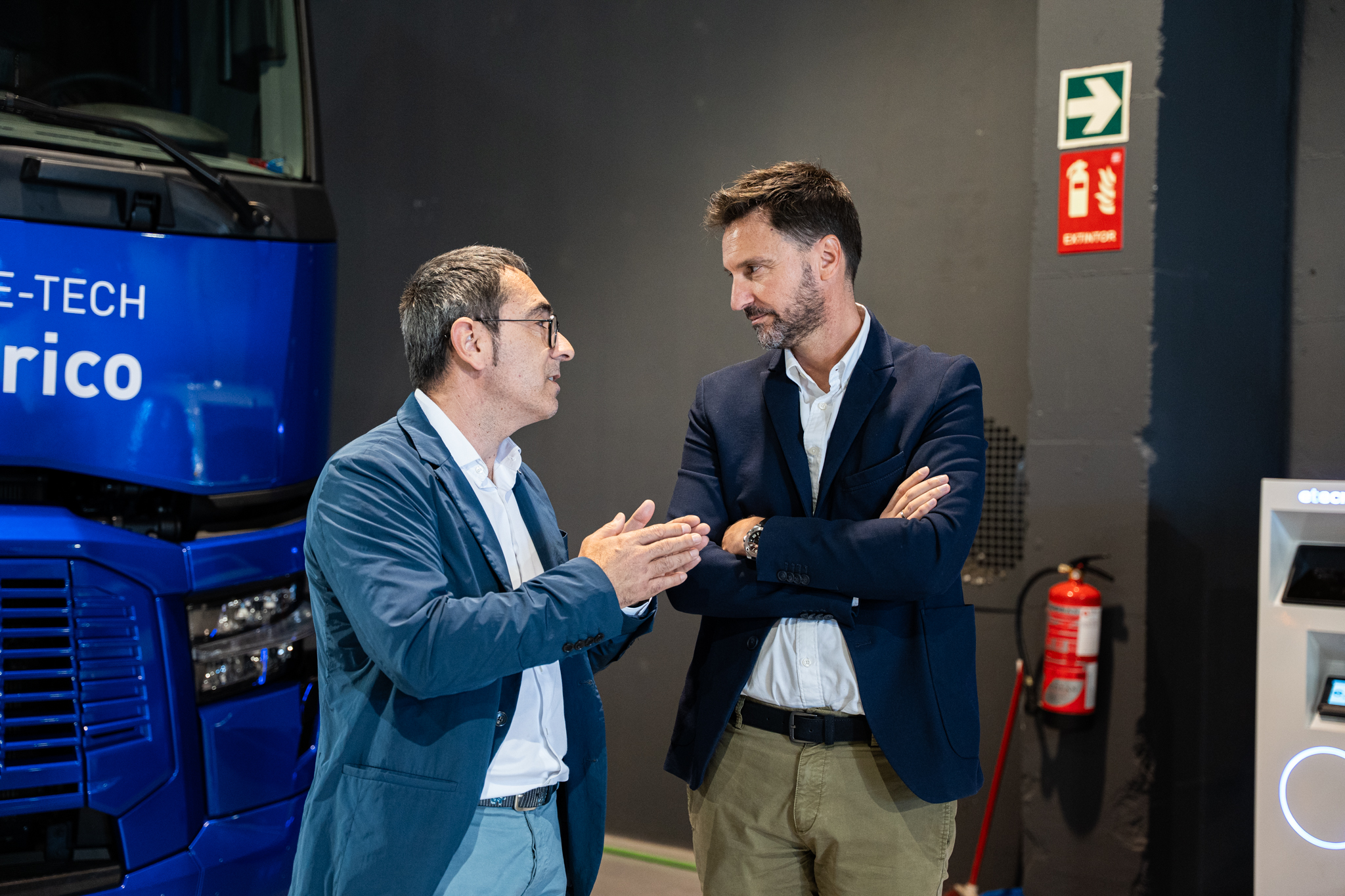
- Renault Trucks: With its Renault Truck E-Tech range.
- Mercedes-Benz: With the Mercedes e600 4×2 tractor unit.
- Ford: With the E-Transit Courier and E-Transit Custom vans.
- NIKKO CENTER (Nissan): With the Townstar and Interstar models.
- Peugeot: The ë-Partner model presented by Borges International Group.
Key dialogues on the present and future of sustainable transport
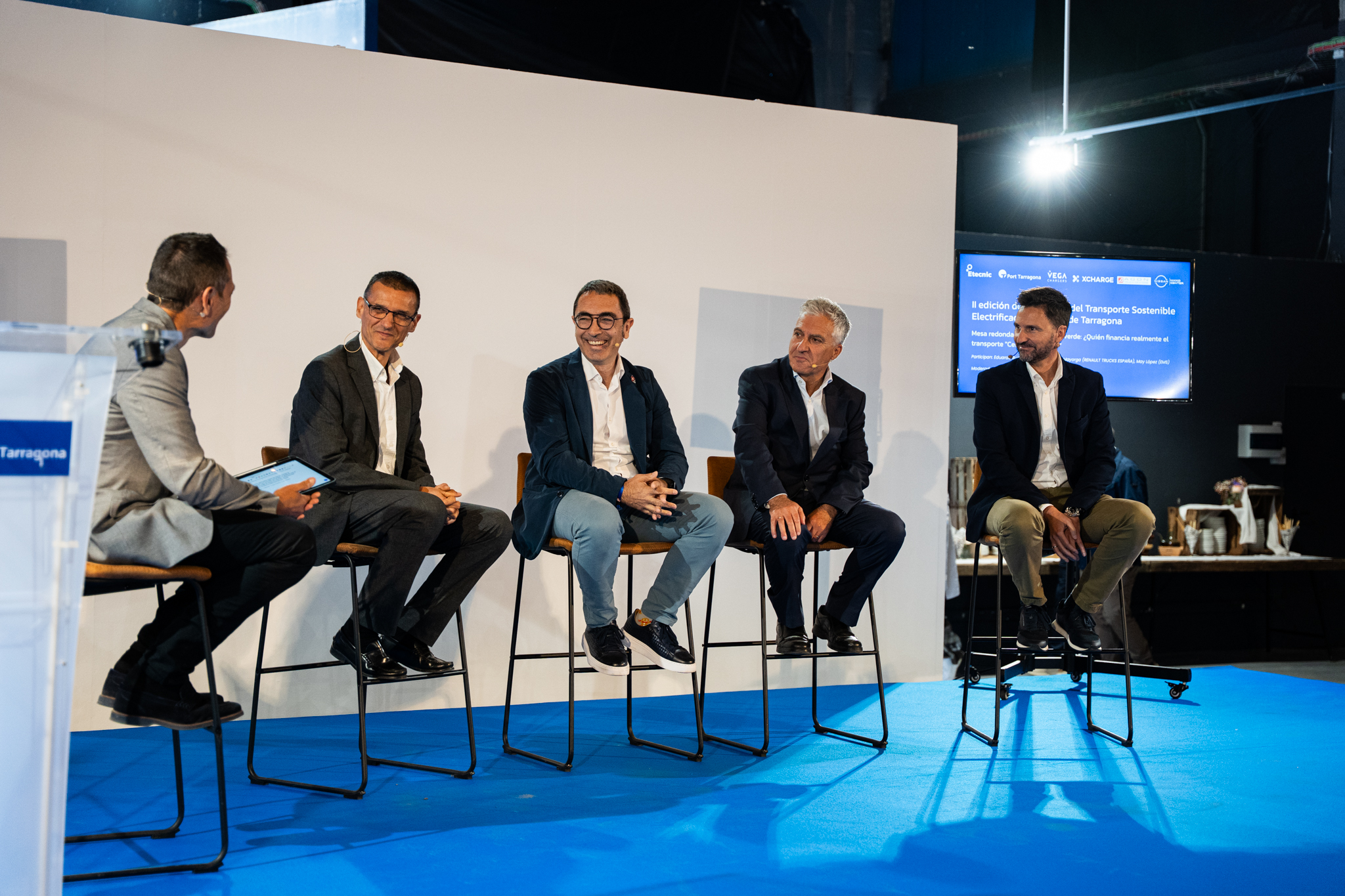
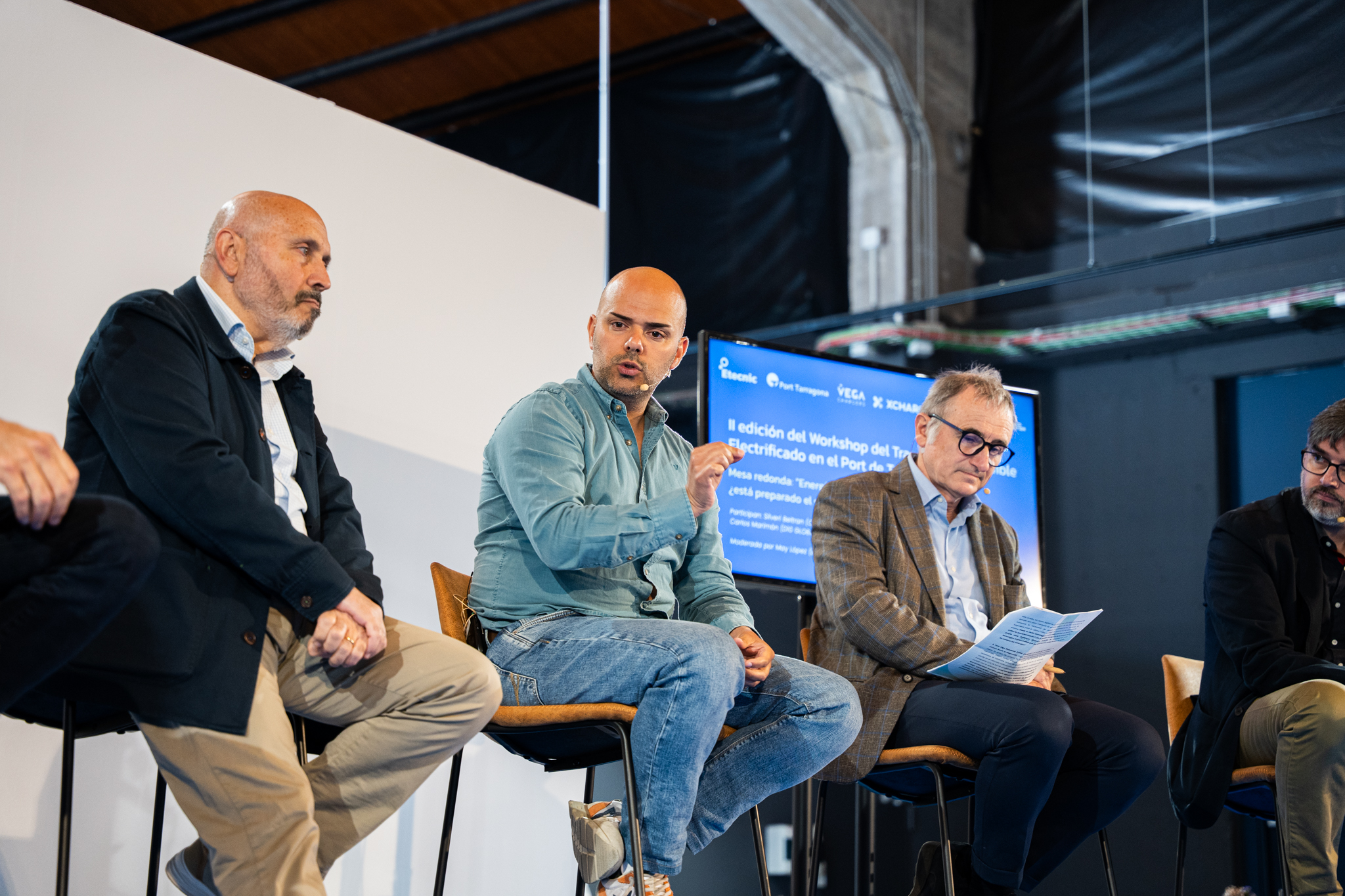
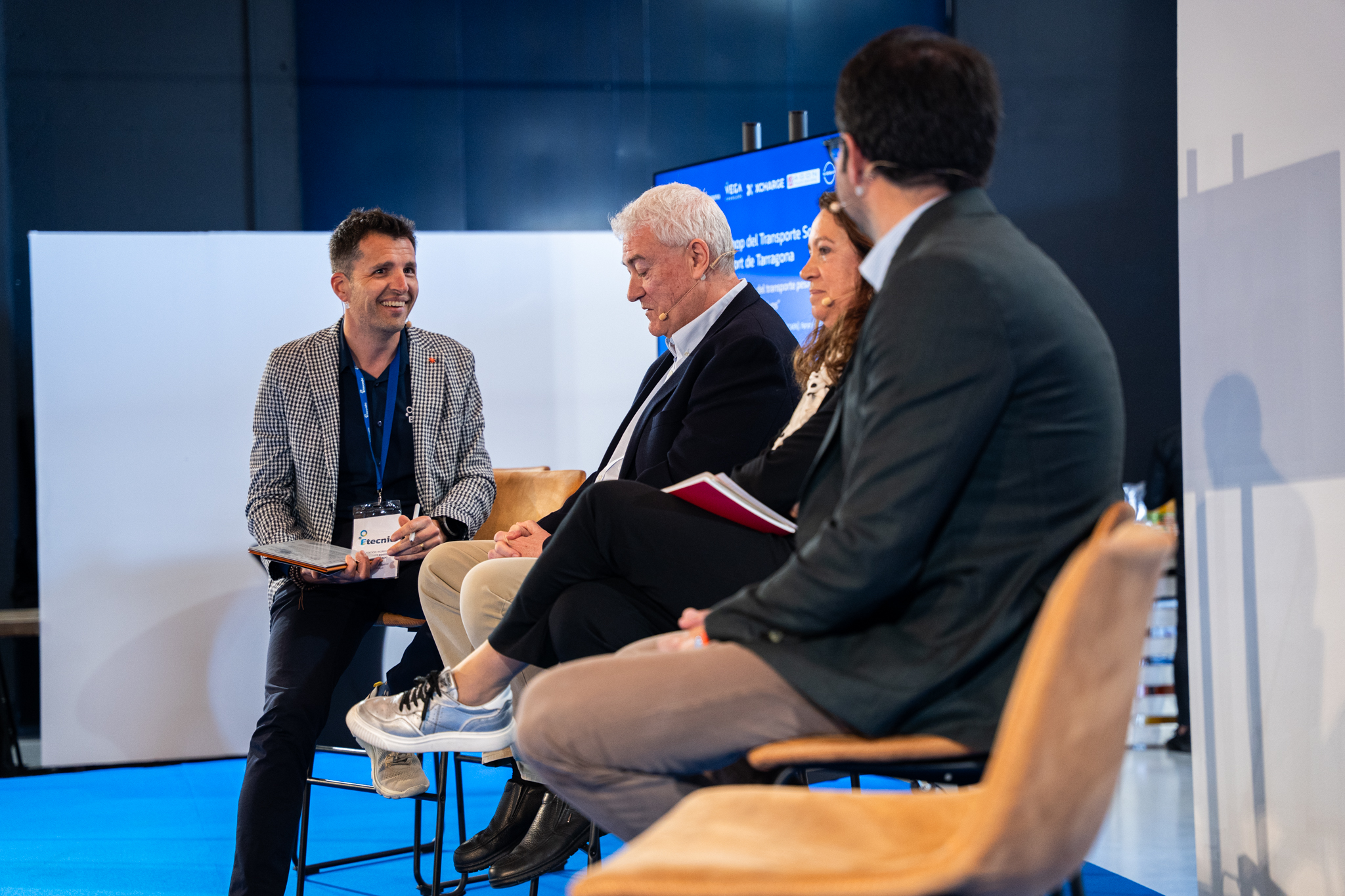
The program included high-level panel discussions addressing operational and financial challenges:
“The energy future of heavy transport”
The program included high-level dialogues where energy and infrastructure challenges were addressed. Ramón I. García, deputy director of the Port Authority of Tarragona, put figures to the challenge, detailing that the Port foresees a need for 100 MW to electrify its activity and that of its concessionaires, with an estimated investment of 24 million euros to connect to the 220 kV grid. In this regard, Assumpta Farran (ICAEN) advocated for an evolution toward “smart aid” that does not just subsidize vehicles but also supports investment in critical infrastructure. For his part, Ferran Menescal (AEDIVE) emphasized the need to build a backbone across the territory with reliable charging corridors to eliminate operational uncertainty for transport operators.
“Energy, electricity grid, and logistics hubs”:
The system’s capacity to absorb this demand was also analyzed by experts from CIMALSA, D10 Global Logistics, Grupo Joanca Logística, and Vega Chargers. Silveri Beltran and David Ibáñez (CIMALSA) proposed that logistics hubs must evolve into spaces that combine services for carriers with digital management, while Luis Puzo (Grupo Joanca Logística) differentiated between the needs of overnight depot charging and the high power required en route. Carlos Marimón (D10 Global Logistics) stressed that demand will need to lean toward energy self-sufficiency, and Iban Fontcuberta (Vega Chargers) highlighted that ultra-high-power solutions, such as the MCS standard, will be essential for long distance.
“The cost of being green”:
The economic viability of the transition was another key focus. May López (EMS) underlined the importance of informing the sector about how daily planning changes, while Eduardo Rueda (XCHARGE) pointed out that the main bottleneck is not technological but administrative, with grid connection timelines that must be drastically reduced. Pedro Mayorga (Renault Trucks España) warned that although manufacturers already offer efficient vehicles, carriers need regulatory certainty to avoid losing competitiveness during the shift.
“The reality of the sector”:
Finally, the workshop gave a direct voice to the protagonists of daily operations. Gabriel Bernal (Transbernal) shared real competitiveness figures, placing the cost per kilometer of an electric truck at €0.38/km compared to the estimated €0.58/km for diesel in 2026. Juan Pozo (Sintra Port) noted that adoption will accelerate when confidence spreads among fleet professionals themselves, and Juan Carlos Pardo (Transpaís) emphasized the potential of electricity as a more stable energy cost against the volatility of fossil fuels. Fernando Agón (Agón Truck Centers) concluded that success lies in comprehensive consulting: carriers must have their infrastructure and energy resolved before acquiring the vehicle.
Conclusions and Roadmap: The future of heavy electromobility
The conference concluded by reaffirming that heavy electromobility has ceased to be a future hypothesis and has become a technologically viable, increasingly competitive, and strategically necessary alternative. Throughout the workshop, several cross-cutting ideas defining the current state of the sector were consolidated:
- Infrastructure as a true enabler: The real driver of change will not just be the vehicle, but the deployment of an infrastructure that combines power, logistics hubs, renewable energy, and management software.
- Competitiveness versus sustainability: Although the environmental factor is key, the business decision will become strategic once it is established that electric transport offers a lower TCO and greater cost stability against diesel volatility.
- Public-private collaboration: No single actor can solve this challenge alone; governance is required that is capable of aligning the interests of the administration, manufacturers, and operators to accelerate investments.
Strategic Roadmap
To transform the logistics system structurally, the following key milestones were defined for the coming years:
1. 2026-2027: Pilots and training. Promote real-world projects in high-activity environments, such as the Port of Tarragona, to reduce uncertainties and train companies in TCO calculation and charging management.
2. 2027-2030: Deployment of hubs and corridors. Scale infrastructure by creating charging hubs in strategic locations and high-power corridors, supported by financing models that share risks among stakeholders.
3. 2030 onwards: Full integration. Consolidate logistics nodes as integrated energy platforms where clean energy, storage, and data form the baseline for competitive and decarbonized logistics.