Can you imagine arriving at a public charge point and being able to pay with your usual card, with no app to download and no need to register for anything? That’s exactly what AFIR is aiming for: the European Regulation that governs how charging infrastructure must work across the whole European Union.
If you operate publicly accessible charge points, this is a regulation that will affect you, and there’s a key date closer than it looks: 1 January 2027. Here’s exactly what it requires, from when, and how to avoid being caught off guard.
What is AFIR and why does it exist?
AFIR is Regulation (EU) 2023/1804, directly applicable across the whole European Union from the moment it entered into force, with no need for transposition into Spanish law. It replaces the old AFID Directive and is part of the EU’s “Fit for 55” package.
Its goal is simple to grasp: guarantee a minimum, interoperable and easy-to-use charging network across Europe, solving long-standing problems such as poor coverage on key corridors, a different app for every operator, opaque pricing, and a lack of open data.
The timeline you need to keep in mind
There are several dates in play, but these two are the ones that most affect a charge point operator:
It’s this second date that affects installations that have already been running for a while: if you have a ≥50kW point with no card reader, you have until that date to add one.
Who does it apply to?
One of the most common misunderstandings is thinking it depends on whether the point is public or private. In reality, AFIR doesn’t distinguish by ownership, but by whether access is open to any user.
It applies to:
It doesn’t apply to:
The right question isn’t “are you public or private?”, but “can anyone use this charger, even just occasionally?”
What does it require on ≥50kW points?
Below 50kW, a QR code or an app with a secure payment gateway is enough. From 50kW upward, the Regulation asks for more:
Aren’t a QR code or the app enough?
No, and this is one of the points that raises the most questions. AFIR sets the payment requirement according to power output: below 50kW, a QR code or an app is enough. From 50kW upward, the Regulation requires a physical reader, regardless of whether an app or QR code also exists.
“The card reader or contactless payment is the guaranteed universal payment method that must always exist on ≥50kW points, to cover any user, including those with no contract or app from a particular operator. The app remains a convenient and recommended channel, but it doesn’t replace this legal requirement.”
The consequences of non-compliance include administrative penalties (each Member State develops its own regime), reputational risk from a poor user experience, and financial risk: programmes such as MOVES III or the PERTE VEC typically require compliance with the regulation in force as an eligibility condition.
Can I limit my charger by software to under 50kW?
No. The Regulation doesn’t measure the 50kW threshold by what the charger delivers at any given moment, but by the maximum power it’s capable of providing. The law itself defines it this way in Article 2: the maximum theoretical power the charge point can provide, not whatever it’s currently configured to.
A limit set by software, reversible from the management panel, doesn’t change the unit’s physical capacity: for AFIR purposes, the charger still counts by what it can deliver, not by what it’s currently allowed to deliver. And if the charger also received a grant (MOVES, PERTE or other EU funds) precisely for having 50kW or more of power, limiting it afterwards to dodge AFIR may conflict with the terms of that grant.
How does EVcharge help?
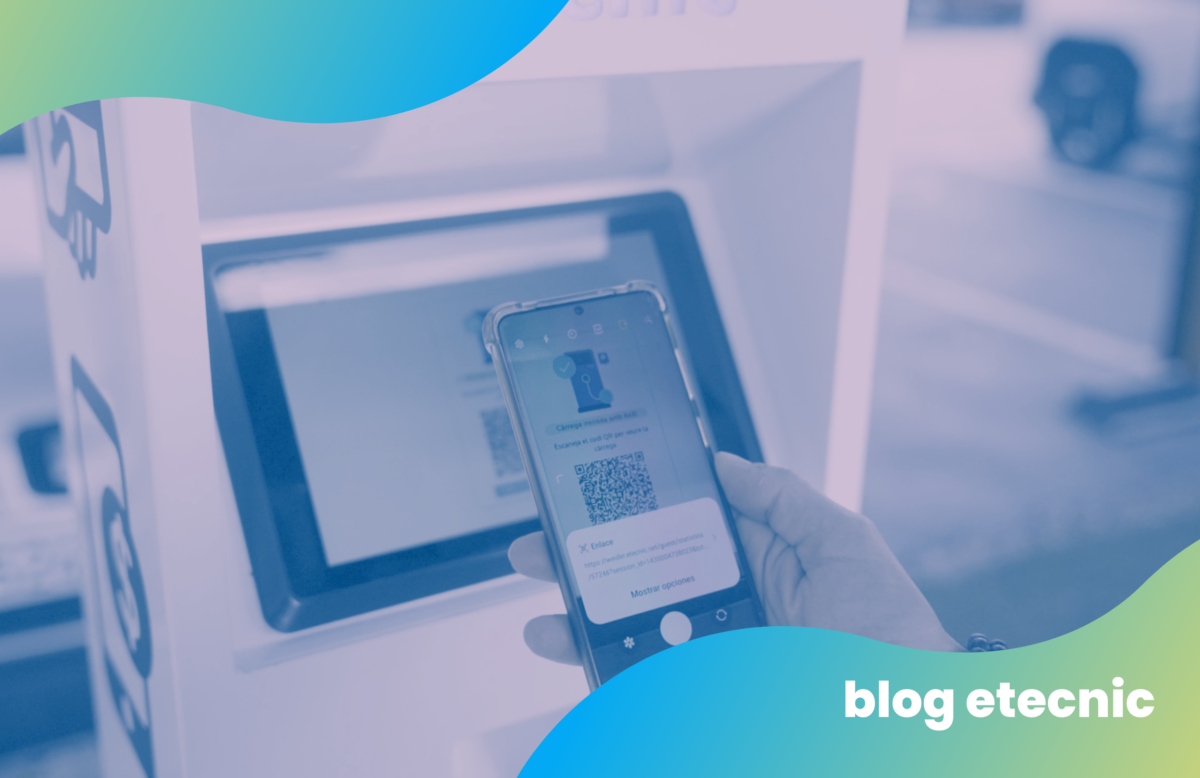
If you manage charge points with EVcharge, you don’t have to solve this by installing a payment terminal at every charger. The EVcharge totem covers AFIR’s payment requirement on ≥50kW points directly, with no prior registration needed:
EVcharge totem: screen, card reader/contactless payment, and centralized payment.
The recommended deadline to place an order and make it in time for 1 January 2027 is the end of October 2026: manufacturing, installing and testing the totem takes time, so the sooner you plan for it, the more room you’ll have.
There’s still time until 2027, but adapting with room to spare always beats doing it in a rush. Want to know how AFIR would apply to your specific installation? Answer six quick questions about your charge point and we’ll tell you what the Regulation requires, by when, and what’s missing. Less than a minute, no data required.