Electric mobility reaches maturity in Spain
The electric mobility sector in Spain has experienced unprecedented growth in 2025. In August, more than 16,000 electrified vehicle registrations were recorded, a 144% increase compared to the previous year. This means that one out of every four passenger cars sold is now electric or a plug-in hybrid.
Furthermore, charging infrastructure has transitioned from a complementary service to an essential one for mid- and long-distance travel. At Etecnic, after analyzing the data from the EVcharge platform, we have identified three major trends:
- Market consolidation
- Technological diversification
- Changes in user charging habits
Growth and consolidation of the electric charging market
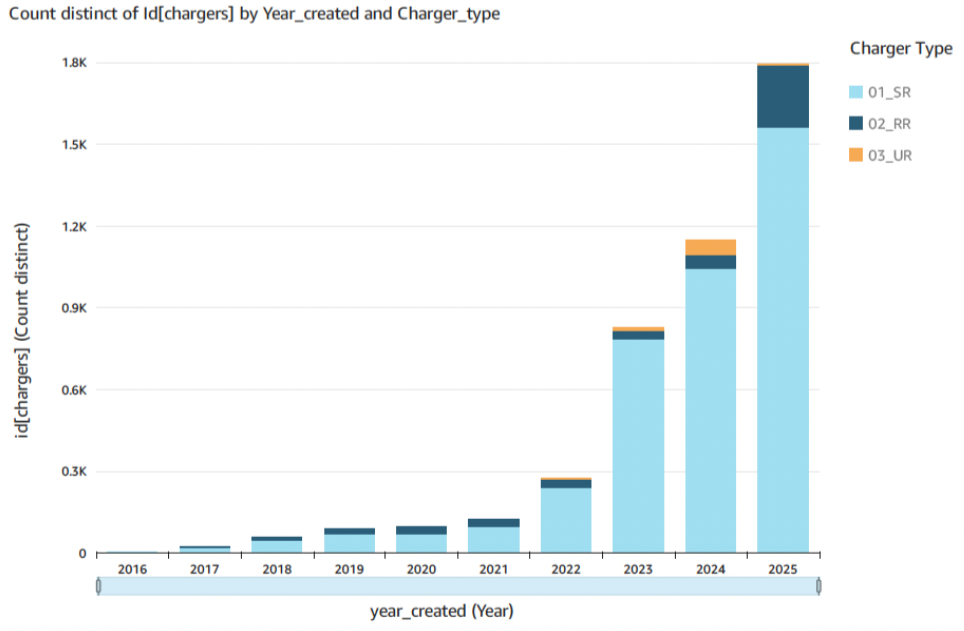
Until a few years ago, finding a charging station was a rare occurrence. Today, they are part of the urban and highway landscape, experiencing impressive growth: between 2021 and 2025, the number of systems multiplied by fifteen.
The network is now more robust, professional, and reliable, capable of absorbing demand peaks without collapsing. This advancement guarantees an efficient and secure charging experience for drivers of electric vehicles.
Technological diversification: fast and ultrafast chargers
Over the last two years, we have seen a massive boom in fast and ultrafast chargers in Spain. Since 2021, fast charging points have multiplied by eight, and today they allow drivers to recover up to 250 km of range in less than 15 minutes.
This diversification addresses the varying needs of drivers:
- Semi-fast charging for urban vehicles.
- Fast and ultrafast charging for long-distance travel.
The strategic planning of the network must balance costs, demand, and user experience to optimize infrastructure deployment.
Changes in the habits of electric vehicle users

Driver behavior has also evolved. Sessional energy consumption has grown across all types of charging:
- Semi-fast charging has tripled its average sessional energy delivery.
- Fast and ultrafast charging delivers more energy across fewer sessions.
This reflects longer journeys, greater confidence in the infrastructure, and a more comfortable charging experience thanks to charging apps that make it easy to locate and reserve charging points in real time.
Challenges and opportunities for the future
Despite these advancements, certain challenges still persist:
- Uneven coverage in rural and industrial areas.
- Grid integration to seamlessly absorb high peak demand.
- The need for dynamic tariffs that balance competitive pricing, operator profitability, and user loyalty.
Additionally, improving waiting areas and amenities will be key to making charging time more pleasant for users.

Conclusion: electric mobility in Spain keeps evolving
What seemed like an uncertain bet back in 2016 has become a consolidated reality in 2025. Electric mobility in Spain has not only reached maturity, but it is also ready to take the next step toward a more equitable, tech-driven, and user-centered network.
The future of EV charging will be more efficient, intelligent, and sustainable, driving an energy transition that has no turning back.

Authors: Ivan Ortiz, Engineering Director at Etecnic, and Jorge Ríos, CEO of Etecnic.
* This article is based on internal data from Etecnic’s EVcharge platform and aggregated sector statistics. Due to confidentiality reasons, absolute values are not shared; references to multipliers and growth rates are calculated approximations based on observed trends. Please note that the reflected figures represent data collected up to August 2025.