
By Jorge Ríos, CEO of ETECNIC Movilidad Eléctrica
Just a decade ago, talking about electric mobility in Spain was still an exercise in faith. In 2015, electric vehicles represented less than 0.2% of the national automobile fleet, and public charging infrastructures were scarce and scattered. Today, after ten years of technical, regulatory, and business advancements, the electric vehicle has transitioned from being a promise to an everyday reality.
The path has not been easy, but it has been steady, and the next ten years point to an even deeper transformation: the integration of energy storage, digitalization, and distributed generation.
A decade of sustained growth
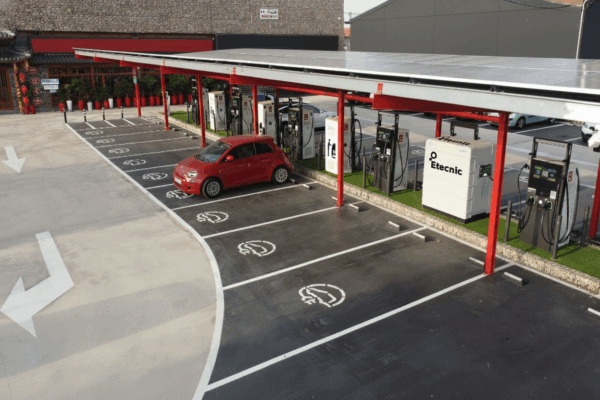
The growth of electric mobility has been exponential. In 2015, barely 3,000 electric vehicles were registered nationwide; by 2024, the figure exceeded 57,000 units, solely within the scope of 100% electric vehicles (BEV), according to data from the Institut Català d’Energia. In parallel, the network of charging points has grown from a few dozen locations to more than 40,000 in service, with a progressive standardization of technologies, connectors, and digital platforms.
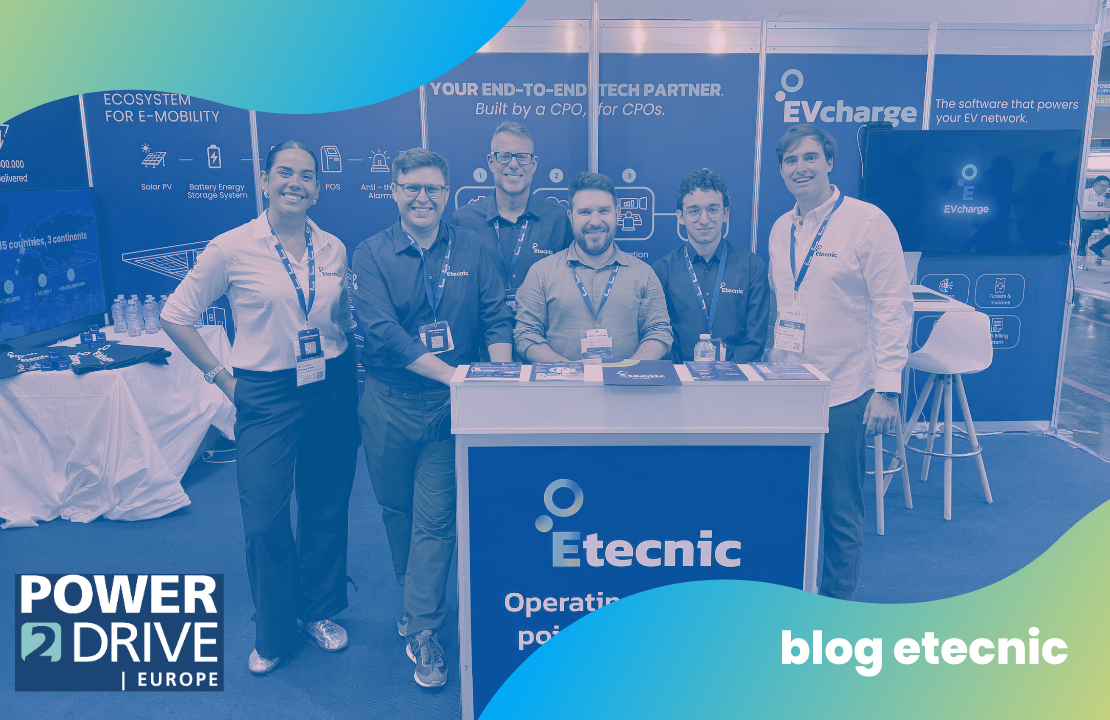
In this context, ETECNIC was born, and this past October 5th we celebrated our 10th anniversary. During this decade, the company has evolved from a charging point integrator to a full player in the electric ecosystem, offering turnkey solutions, EVcharge management software, and operation, maintenance, and engineering services for public and private networks.
The sector has matured and, along with it, expectations: it is no longer just about installing chargers, but about building local, flexible, and resilient energy systems.
The new framework: the Decret Llei 22/2025 and energy resilience
On October 28, 2025, the Generalitat approved Decret Llei 22/2025, a regulation that marks a turning point in Catalan energy policy. The law was born after the major blackout on April 28, which exposed the grid’s vulnerability and the system’s reliance on external sources. Its goal is clear: to strengthen supply resilience through storage, distributed generation, and energy autonomy.
For the first time, Catalan regulations explicitly recognize batteries, charging points, and local generation as infrastructure of public interest and social utility, simplifying paperwork and accelerating their deployment.
In practice, this opens up a direct opportunity for projects like charging hubs with backup batteries and low-voltage connections—a model ETECNIC is already working on. A prime example is the SMART PRICING project, which was recognized by AEDIVE with the Santiago Losada Award for the most innovative business project of the year. This comes in addition to the International Mobility Awards, where Etecnic won Best SME, presented by Empresas por la Movilidad Sostenible.
The decree reduces urban planning barriers, allows hybrid installations (energy + battery + charging) to be processed in a single file, and prioritizes projects that contribute to grid stability.
In simple terms: energy stops coming from afar to be produced and managed close to those who need it. And that is exactly where electric mobility, storage, and digitalization converge.
La próxima década: de la recarga a los ecosistemas energéticos locales
Si los primeros diez años fueron los de la infraestructura, los próximos serán los de la inteligencia.
La combinación de energías renovables, baterías, software y vehículos eléctricos conectados creará auténticos ecosistemas energéticos distribuidos, donde los vehículos serán también una pieza del equilibrio de la red.
En este nuevo escenario, el valor ya no se medirá solo en kilovatios o cargadores instalados, sino en capacidad de gestión y flexibilidad.
La recarga rápida y ultrarrápida se complementará con modelos híbridos de autoconsumo, almacenamiento y respuesta a la demanda, y las ciudades y empresas pasarán de ser consumidoras pasivas a gestoras activas de energía.
La movilidad eléctrica será, más que nunca, el nexo entre la energía y el territorio.
An industrial and social opportunity
The energy transition is no longer just an environmental issue, but an economic opportunity and a matter of technological sovereignty.
Catalonia and Spain have the potential to consolidate an industrial network around electric mobility and energy storage.
The investments planned by the European Union —such as the BESS programs, MOVES Corredores, or the new resilience funds— can accelerate the implementation of thousands of local projects that generate employment and reduce foreign dependency.
ETECNIC faces this new stage with the same vision as ten years ago: to turn electric mobility into an engine for progress, innovation, and competitiveness.
The next decade will be that of distributed energy, connected mobility, and local autonomy.
And if we have learned anything during this time, it is that big changes do not happen all at once: they are built step by step, charger by charger, city by city.
Jorge Ríos
CEO, ETECNIC Movilidad Eléctrica